AI/Data science Discipline Course: Discipline lecture series about the advances and future directions of major AI/data science areas, to be delivered by world leaders:
| 20 Aug: AI/Data science Discipline Course (Meeting room 103, MCEC) |
| Time |
Talk |
Speaker |
| 08:00-08:25 |
Registration |
|
| 08:25-08:30 |
Opening |
Prof Longbing Cao |
| 08:30-09:30 |
Managing the Internet of Things: Challenges, Activities, and Future Directions
The Internet of Things (IoT) is widely regarded as a leading technology to change the world in next decade. IoT will play a critical role to i) improve productivity, operational effectiveness, decision making, and to ii) identify new business models for social and economic opportunities. While IoT-based digital strategies and innovations provide industries across the spectrum with exciting capabilities to create a competitive edge and build more value into their services, there are still significant gaps in making IoT a reality, specially on effectively managing large volume of IoT devices and the information generated from them. In this talk, I will discuss the technical challenges around IoT, overview my 10-year research activities, and also discuss some future research directions.
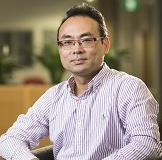
Michael Sheng – ARC Future Fellow
Professor, Head of Department of Computing
Macquarie University, Australia
Dr. Michael Sheng is a full Professor at Macquarie University. Michael holds a PhD degree in computer science from the University of New South Wales (UNSW) and did his post-doc as a research scientist at CSIRO ICT Centre. From 1999 to 2001, Sheng also worked at UNSW as a visiting research fellow. Prior to that, he spent 6 years as a senior software engineer in industries.
Dr. Sheng has more than 270 publications as edited books and proceedings, refereed book chapters, and refereed technical papers in journals and conferences including ACM Computing Surveys, ACM TOIT, ACM TOMM, ACM TKDD, VLDB Journal, Computer (Oxford), IEEE TPDS, TKDE, DAPD, IEEE TSC, WWWJ, IEEE Computer, IEEE Internet Computing, Communications of the ACM, VLDB, ICDE, ICDM, CIKM, EDBT, WWW, ICSE, ICSOC, ICWS, and CAiSE.
Dr. Michael Sheng is the recipient of the ARC Future Fellowship (2014), Chris Wallace Award for Outstanding Research Contribution (2012), and Microsoft Research Fellowship (2003). He is a member of the IEEE and the ACM.
|
 |
| 09:30-10:30 |
Computer vision meets machine learning
Since the concept of Turing machine has been first proposed in 1936, the capability of machines to perform intelligent tasks went on growing exponentially. Artificial Intelligence (AI), as an essential accelerator, pursues the target of making machines as intelligent as human beings. It has already reformed how we live, work, learning, discover and communicate. In this talk, I will review our recent progress on AI by introducing some representative advancements from algorithms to applications, and illustrate the stairs for its realization from perceiving to learning, reasoning and behaving. To push AI from the narrow to the general, many challenges lie ahead. I will bring some examples out into the open, and shed lights on our future target. Today, we teach machines how to be intelligent as ourselves. Tomorrow, they will be our partners to get into our daily life.
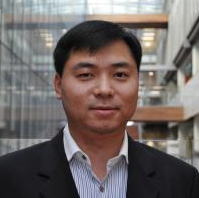
Dacheng Tao – ARC Laureate Fellow
Professor of Computer Science, School of Information Technologies
University of Sydney, Australia
Dacheng Tao is Professor of Computer Science and ARC Future Fellow in the School of Information Technologies and the Faculty of Engineering and Information Technologies at The University of Sydney. He was Professor of Computer Science and Director of the Centre for Artificial Intelligence in the University of Technology Sydney. He mainly applies statistics and mathematics to Artificial Intelligence and Data Science. His research interests spread across computer vision, data science, image processing, machine learning, and video surveillance. His research results have expounded in one monograph and 500+ publications at top journals and conferences, such as IEEE T-PAMI, T-NNLS, T-IP, JMLR, IJCV, IJCAI, AAAI, NIPS, ICML, CVPR, ICCV, ECCV, ICDM; and ACM SIGKDD, with several best paper awards, such as the best theory/algorithm paper runner up award in IEEE ICDM’07, the best student paper award in IEEE ICDM’13, and the 2014 ICDM 10-year highest-impact paper award. He received the 2015 Australian Scopus-Eureka Prize, the 2015 ACS Gold Disruptor Award and the 2015 UTS Vice-Chancellor’s Medal for Exceptional Research. He is a Fellow of the IEEE, OSA, IAPR and SPIE.
|
 |
| 10:30-11:00 |
Morning Tea |
|
| 11:00-12:00 |
Advances in machine learning
Qiang Yang – IEEE/AAAI Fellow
Head of Department of Computer Science and Engineering
Hong Kong University of Science and Technology
Qiang Yang is the head of Computer Science and Engineering (CSE) Department at Hong Kong University of Science and Technology (HKUST), where he is a New Bright Endowed Chair Professor of Engineering and Director of the Big Data Institute. Between 2012 and 2014, he was a founding director of the Huawei Noah’s Ark Research Lab. His research interests are data mining and artificial intelligence including machine learning, planning and case based reasoning He is a fellow of AAAI, IEEE, IAPR and AAAS. He was the founding Editor in Chief of the ACM Transactions on Intelligent Systems and Technology (ACM TIST) and is now the founding EiC of IEEE Transactions on Big Data. He has served as a PC co-chair and general co-chair of several top international conferences, including ACM KDD 2010 and 2012 and IJCAI 2015. He is on the board of Trustees of IJCAI, Vice President of Chinese AI Society (CAAI) and a member of the AAAI executive council.
|
 |
| 12:00-13:00 |
Mathematical modeling & bitcoin blockchain
Unlike cash transactions, most electronic transactions require the presence of a trusted authority to verify that the payer has sufficient funding to be able to make the transaction, and to adjust the account balances of the payer and payee. To overcome the need for such an authority, `BitCoin’ was proposed in 2009 as an `electronic equivalent of cash’. The general idea of Bitcoin is that transactions are verified in a coded form in a `blockchain’, which is maintained by a community of participants who are connected electronically.
Problems can arise when the blockchain splits: that is different participants have different versions, something which can happen only when there are propagation delays, at least if all participants are behaving according to the protocol. On the other hand, there have been some strategies proposed, for example the `Selfish-Mine Strategy’ of Eyal and Sirer, which can affect the splitting behavior.
In this talk I shall present some mathematical models for analysing these phenomena.
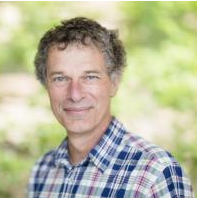
Peter Taylor – Australian Laureate Fellow
Director, ARC Centre of Excellence for Mathematics and Statistics of Complex Systems
The University of Melbourne, Australia
Professor Peter Taylor is an Australian Laureate Fellow from University of Melbourne. He got the PhD degree from University of Adelaide, in 1987. His research interests include stochastic modelling, Markov processes, queueing theory, parameter estimation etc.
Peter is the editor-in-chief of ‘Stochastic Models’, and on the editorial boards of ‘Queueing Systems’, the ‘Journal of Applied Probability’ and ‘Advances in Applied Probability’. He served on the Awards Committee of the Applied Probability Section of the Institute for Operations Research and Management Science (INFORMS) from 2005-2007 and in 2016 was Co-Chair of the committee for the Nicholson Prize, awarded for the best student paper in operations research.
|
 |
| 13:00-14:00 |
Lunch Break |
|
| 14:00-15:00 |
Advances in big graph/data processing
Graphs are very important parts of Big Data and widely used for modelling complex structured data with a broad spectrum of applications such as bioinformatics, web search, social network, road network, etc. Over the last decade, tremendous research efforts have been devoted to many fundamental problems in managing and analysing graph data. In this talk, I will first overview our recent research efforts in processing big graphs including scalable processing theory and techniques, distributed computation, and system framework. We will also look to the future of the area.
Xuemin Lin – IEEE Fellow
School of Computer Science and Engineering
The University of New South Wales
Xuemin Lin is a UNSW Scientia Professor and the head of database group in the school of computer science and engineering at UNSW, Australia. Xuemin’s research interests lie in databases, algorithms, and complexities. Specifically, he is working in the area of scalable data processing covering graph data, spatial-temporal data, streaming data, uncertain data, text data, etc. Xuemin was an associate editor of ACM TODS (2008-2014), IEEE TKDE (Feb 2013- Jan 2015), and an associate editor-in-Chief of IEEE TKDE (2015-2016). He is currently the Editor-in-Chief of IEEE TKDE (2017 Jan – Now). Xuemin Lin was selected as one of the National Thousand Distinguished Overseas Scholars in China in 2010. He is an IEEE Fellow.
|
 |
| 15:00-16:00 |
Ethics in artificial intelligence
I will discuss four recent events raising profound ethical questions about the development and deployment of AI systems: the Tay chatbot, the Compas program, the Facebook experiment to manipulate people’s emotions, and the first fatality in a Tesla car driving in Autopilot mode. I will suggest some lessons that can be drawn from these incidents about AI development and deployment.
Toby Walsh – Scientia Professor of AI
Group Leader, Data61
Professor, University of New South Wales, Australia
Toby Walsh is a leading researcher in Artificial Intelligence. He was recently named in the inaugural Knowledge Nation 100, the one hundred “rock stars” of Australia’s digital revolution. He is Guest Professor at TU Berlin, Scientia Professor of Artificial Intelligence at UNSW and leads the Algorithmic Decision Theory group at Data61, Australia’s Centre of Excellence for ICT Research. He has been elected a fellow of the Australian Academy of Science, and has won the prestigious Humboldt research award as well as the 2016 NSW Premier’s Prize for Excellence in Engineering and ICT. He has previously held research positions in England, Scotland, France, Germany, Italy, Ireland and Sweden.
He regularly appears in the media talking about the impact of AI and robotics. In the last year, he has appeared in TV and the radio on the ABC, BBC, Channel 7, Channel 9, Channel 10, CCTV, DW, NPR, RT, SBS, and VOA, as well as on numerous local radio stations. He also writes frequently for print and online media. His work has appeared in the New Scientist, American Scientist, Le Scienze, Cosmos and The Best Writing in Mathematics (Princeton University Press). His twitter account has been voted one of the top ten to follow to keep abreast of developments in AI. He often gives talks at public and trade events like CeBIT, the World Knowledge Forum, TEDx, The Next Big Thing Summit, and PauseFest. He has played a key role at the UN and elsewhere on the campaign to ban lethal autonomous weapons (aka “killer robots”).
|
 |
| 16:00-16:30 |
Afternoon Tea |
|
| 16:30-17:30 |
Knowledge discovery & social analytics
Nowadays, there are applications in which the data are modelled best not as persistent tables, but rather as transient data streams. In this lecture, we discuss the current trends in machine learning and data mining algorithms. We discuss the fundamental issues in learning in dynamic environments like learning decision models that evolve over time, learning and forgetting, concept drift and change detection. We will analyse the evolution of social networks. Analysing and mining such evolutionary streams gives actionable insights into data. In this talk we discuss the research opportunities opened in analysing evolving data, detecting events, identifying communities and tracking the evolution of communities through the events they trigger.
Joao Gama – ACM Distinguish Speaker (2016-2019)
Associate Professor, Laboratory of Artificial Intelligence and Decision Support
University of Porto Porto, Portugal
Joao Gama is an Associate Professor at the University of Porto, Portugal. He is also a senior researcher and member of the board of directors of the Laboratory of Artificial Intelligence and Decision Support (LIAAD), a group belonging to INESC Porto. João Gama serves as the member of the Editorial Board of Machine Learning Journal, Data Mining and Knowledge Discovery, Intelligent Data Analysis and New Generation Computing. He served as Co-chair of ECML 2005, DS09, ADMA09 and a series of Workshops on KDDS and Knowledge Discovery from Sensor Data with ACM SIGKDD. He was also the chair for the conference of Intelligent Data Analysis 2011. He has given 7 keynotes and 2 plenary talks. His main research interest is in knowledge discovery from data streams and evolving data. He is the author of a recent book on Knowledge Discovery from Data Streams. He has extensive publications in the area of data stream learning.
|
 |
Big Data Forum: Keynote and invited speeches by industry, government and research leaders, plus two exciting panels:
| 21 Aug: Big Data Forum (Meeting room 103, MCEC) |
| Time |
Talk |
Speaker |
| 08:30-09:00 |
Registration |
|
| 09:00-09:10 |
Opening |
Prof Longbing Cao |
| 09:10-09:35 |
Invited Talk: Applications of Big Data Techniques for Social Analytics
Dr Dickson Lukose
Chief Data Scientist
GCS Agile, Australia
With over 25 years of experience in consulting services, applied research and development of Intelligence Systems, Dr. Lukose now leads a team of Data Scientist doing Big Data Analytics (BDA). Prior to joining GCS Agile, Dr. Lukose was the Senior Director of the Artificial Intelligence (AI) Lab in MIMOS Berhad (Malaysia) developing AI software for BDA. Earlier in his career, Dr. Lukose worked as Principal Knowledge Engineer with Mindbox Inc. (USA).
|
 |
| 09:35-10:00 |
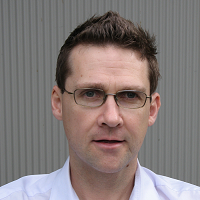
Invited Talk
Prof James Bailey
The University of Melbourne
James Bailey is a Professor in School of Computing and Information Systems at University of Melbourne. He has served in editorial boards of Knowledge and Information Systems, Social Network Analysis and Mining, and IEEE Transactions on Knowledge and Data Engineering (2011-2015). He also served as co-chair for PAKDD 2016, CIKM 2015, tutorial co-chair of ICDM 2014. His research interests include machine learning and data mining, Big Data, learning analytics. He has continually obtained ARC grants on data mining projects since 2011.
|
 |
| 10:00-10:20 |
Morning Tea |
|
| 10:20-11:20 |
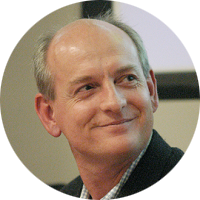
Keynote speech: The Past, Present, and Future of Artificial Intelligence
The talk will cover the historical development of AI, current and future trends, applications, opportunities for industry in the near and medium term, and likely benefits. Looking further ahead: I will ask whether human-level AI is achievable, and, if so, what are the likely impacts on society. Are there risks, and how could they arise?
I will suggest a fundamental reorientation of the field of AI towards provably beneficial systems and will outline methods for designing such systems.
Prof Stuart Russell
University of California, Berkeley
Stuart Russell received his B.A. with first-class honours in physics from Oxford University in 1982 and his Ph.D. in computer science from Stanford in 1986. He then joined the faculty of the University of California at Berkeley, where he is Professor (and formerly Chair) of Electrical Engineering and Computer Sciences and holder of the Smith-Zadeh Chair in Engineering. He has served as an Adjunct Professor of Neurological Surgery at UC San Francisco and as Vice-Chair of the World Economic Forum’s Council on AI and Robotics. He is a recipient of the Presidential Young Investigator Award of the National Science Foundation, the IJCAI Computers and Thought Award, the World Technology Award (Policy category), the Mitchell Prize of the American Statistical Association, and Outstanding Educator Awards from both ACM and AAAI. From 2012 to 2014 he held the Chaire Blaise Pascal in Paris. He is a Fellow of the American Association for Artificial Intelligence, the Association for Computing Machinery, and the American Association for the Advancement of Science. His book “Artificial Intelligence: A Modern Approach” (with Peter Norvig) is the standard text in AI; it has been translated into 13 languages and is used in over 1300 universities in 118 countries. His research covers a wide range of topics in artificial intelligence including machine learning, probabilistic reasoning, knowledge representation, planning, real-time decision making, multitarget tracking, computer vision, computational physiology, and philosophical foundations. He also works for the United Nations, developing a new global seismic monitoring system for the nuclear-test-ban treaty. His current concerns include the threat of autonomous weapons and the long-term future of artificial intelligence and its relation to humanity.
|
 |
| 11:20-11:45 |
Adoption of AI / Machine Learning in IP Australia
Dramatic improvements in machine learning, computer vision, natural language processing, speech recognition, and robotics have driven the rise of AI technology. Combining these technologies means that some tasks that traditionally required human involvement can now be completely undertaken by machines, while in others, human efforts can be greatly augmented. In the context of the Australian government, AI technologies are especially attractive due to their ability to tackle common challenges including but not limited to resource constraints and process heavy operations, responsiveness of government organisations, and fact-based, proactive decision making.
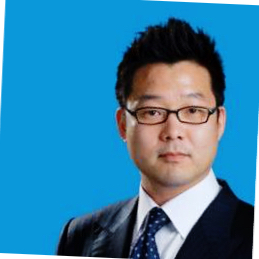
IP Australia is undertaking AI research and development activities, and in July 2017 released an early public prototype called Trade Mark Assist. Leveraging artificial intelligence capabilities including machine learning and natural language processing, Trade Mark Assist educates and assists self-filers, in particular small and medium enterprises, through the initial stages of the trade mark application process. The presentation aims to provide, at a high-level, the vision of IP Australia related to AI/Machine Learning, introduction of Trade Mark Assist with a particular focus on machine learning, and challenges and lessons learnt specific to applying AI initiatives in the government context. Dr Kyusik Kim
Director Cognitive Futures
IP, Australia
Kyusik is leading AI/Machine Learning research and development within IP Australia. His section is developing prototypes to demonstrate how Machine Learning can improve the quality and timeliness of IP rights processing, draw insights from new and existing data, and provide a citizen-centric 24/7 experience to IP Australia’s customers.
Prior to joining IP Australia, Kyusik served as senior team leader at a tier 1 management consulting firm and worked with clients from Federal Government, Telecommunication, Finance, and Automotive industries. Kyusik holds a PhD (ANU), Masters (ANU), and Bachelor (USYD) degree in Business Information System. Kyusik’s main research areas of interest include; machine learning, IT & productivity, and Big Data.
|
 |
| 11:45-12:10 |
Invited Talk: Data Discovery: The Search for the Light at the End of a Tunnel
This presentation is a cautionary tale about delivering business outcomes using the tools and techniques of data science.
Traditional data science is about using structured data and known examples to develop models to detect cases of interest in data. Signature detection and anomaly detection are commonly used for this purpose. Another challenge in data science is discovering patterns, trends and relationships in data. The former is known as the supervised or guided-learning tradition and the latter the unsupervised or the discovery-learning practice.
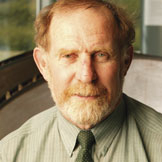
This presentation provides a ‘war story’ of one team’s quest to discover knowledge and insights in data. It provides some salutary lessons about going down familiar and well-trodden paths to try to make discoveries only to find that the team was moving in the wrong direction and in some cases heading down dead-end alleys. The presentation covers how the team got back on track in trying to find the elusive light at the end of a tunnel. Dr Warwick Graco
ATO
Warwick has worked in defence, health and taxation and has been involved in analytics for over 20 years. He is a practicing analytics professional and is currently convenor of the Whole of Government Data Analytics Centre of Excellence and is a senior data scientist in Data Science and Special Acquisition Group of the Smarter Data Program of the ATO. He has a BSc from the University of New South Wales and a PhD from the University of New England Australia. His professional interests include digital transformation and innovation, organizational learning, organizational decision making and analytics. He is a former board member of the Institute of Analytics Professionals Australia and is currently a member of the Board of the College of Organizational Psychology of the Australian Psychological Society.
|
 |
| 12:10-12:35 |
Invited Talk: DataSpark’s work
Dr Paul Rybicki
Chief Country Officer
DataSpark, Australia
Chief Country Officer of DataSpark Australia for the SingTel Group, 5 years experience running OTT, TV & Content businesses, 5 years running Insights and Data Analytics functions at News Corp Pay TV operators and 10 years management consulting in telco and media across APAC and Europe
|
 |
| 12:35-13:30 |
Lunch Break |
|
| 13:30-13:55 |
How Can Big Data Analytics Make Impacts?
Data analytics backed by machine learning discover patterns from discriminated data, and build predictive capability from the derived patterns. To date, such data analytics are widely used in the financial market, marketing, insurance, and there is growing demand in infrastructure and transport. The impact of machine learning is in utilising data to gain unique business insights, as well as in providing innovative solutions to better business efficiency. This talk shares general trends in machine learning as well as information gained from collaborative projects with industry partners, particularly in water pipe failure prediction and advanced data analytics in transport. For the smart water pipe failure prediction project, we have worked with more than 30 utilities from around the world to develop a data-driven predictive analytics approach that more accurately predicts pipe failure, and thus offers networks the ability to better target repair and renewal programs. Deploying the technique allows utilities to prioritise capital spending to high risk assets, reduce operational costs of unexpected failure, and minimise the disruption to water supplies and the community. The advanced data analytics in transport is focused on active data fusion for traffic information service, and large scale traffic simulation to provide a highly accurate, real-time traffic information services from an advanced computing platform.
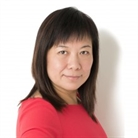
Dr Fang Chen
Group Leader, Enterprise Analytics
DATA61 | CSIRO
Dr. Fang Chen has an outstanding track record in innovation. In the past 20 years, she has created many world-class solutions while working at organisations like the Beijing Jiaotong University, Intel, Motorola and CSIRO. She leads many taskforces with the goal of utilising data analytics and computational platforms with scales and impacts both national and international. She has helped many industries towards excelling by better solutions to increase productivity, profitability and better customer satisfaction. She has achieved great success in many technical solutions and gained industry recognitions such as the ITS (Intelligent Transport System) Australia National Award 2014 and 2015. She is the “Water Professional of the Year” awarded by Australian Water Association (AWA) NSW on her exceptional leadership and achievements in helping water sector through innovative solutions. Dr Chen has more than 250 refereed publications and has filed more than 30 patents in 8 countries. She is also a conjoint professor with the University of New South Wales and adjunct professor with the University of Sydney, who has supervised more than 20 PhD students to finish.
|
 |
| 13:55-14:20 |
Invited Talk: New Directions in Big Data Analytics for Official Statistics
National statistics agencies like the Australian Bureau of Statistics (ABS) produce a comprehensive set of statistical products, such as key economic indicators, population estimates, and measures of social progress. Traditionally, the ABS has relied on data collected from surveys and the administrative programs of government to meet its statistical compilation needs. With the emergence of the Internet as a unified global platform for digital connectivity, diverse new sources of human- and machine-generated data are now available for use in statistical production. The analytical insights derived from these ‘big data’ sources – including commercial transactions, remote imagery, sensor measurements, geospatial positioning, web content, and online user activity – enable the delivery of innovative, timely and cost-effective information solutions for statistical consumers. This presentation outlines the key concepts, methods and technologies that underpin the next generation of ABS analytical capabilities. Examples are presented from the application of a novel analytical platform created by the ABS – the Graphically Linked Information Discovery Environment (GLIDE) – to three significant use cases.
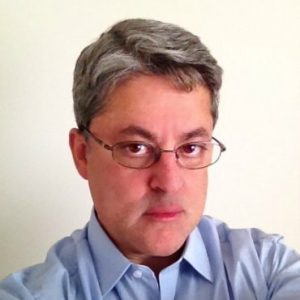
Dr Frederic R Clarke
Director, Emerging Data & Methods
Australian Bureau of Statistics, Australia
Ric Clarke is the Director of Emerging Data and Methods in the Australian Bureau of Statistics (ABS). He leads a multidisciplinary research and development team in the delivery of innovative approaches for the representation, integration and analysis of complex multisource data.
|
 |
| 14:20-14:45 |
Cost effectiveness of big data computation and storage in the cloud – understanding the trade-offs
The size of data is growing exponentially. How do we cost-effectively manage big data generated in our life? This talk uses Astrophysics as an example to illustrate the trade-offs of computation and storage in the cloud. A huge cost can be saved by managing big data appropriately for the real world.
Prof Yun Yang
Swinburne University of Technology, Australia
Dr Yun Yang is a full professor in School of Software and Electrical Engineering, Swinburne University of Technology, Australia. He earned his PhD in computer science from the University of Queensland in 1992. During 1993 – 1996, he worked at CRC for DSTC (Distributed Systems Technology Centre). He then went to Deakin University as an academic before he joined Swinburne in 1999. His research areas include cloud computing, big data, software engineering and services computing. He is on the editorial board of IEEE Transactions on Cloud Computing. He was a panel member for ERA (Excellence in Research for Australia) 2015.
|
 |
| 14:45-15:10 |
Afternoon Tea |
|
| 15:10-15:35 |
Invited Talk
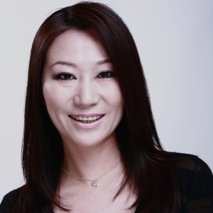
Dr Amy Shi-nash
Head of Data Science
Commonwealth Bank, Australia |
 |
| 15:35-16:00 |
Invited Talk: Modern Analytics in Insurance for a Complex World
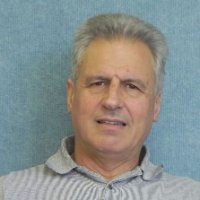
Dr Paul Beinat
Director
Neuronworks, Australia
|
 |
| 16:00-16:20 |
Invited Talk: The Manager’s Guide to Solving the Big Data
Conundrum
David Willingham
Senior Application Engineer
Data Analytics, MathWorks
|
 |
| 16:20-17:40 |
- Panel: Developments and Challenges with the Data Economy
Warwick Graco(Moderator), Stuart Russell, Amy Shi-nash, Dickson Lukose, Fang Chen |
|
| 17:40-18:30 |
Networking sponsored by CBA |
Amy Shi-nash |
AI/Data science Executive Workshop: best practice and real-life enterprise analytics case studies for data and business executives and managers to make informed and smarter decisions.
| 22 Aug: AI/Data science Executive Workshop (Meeting room 101, MCEC) |
| Time |
Talk |
Speaker |
| 08:30-09:00 |
Registration |
|
| 09:00-09:10 |
Introduction |
Prof Longbing Cao |
| 09:10-10:10 |
Machine Learning
This engaging presentation outlines the capabilities and potentials of machine learning in the age of big data.
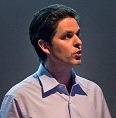
Prof Geoff Webb
Monash University, Australia
Geoff Webb is a leading data scientist. He is Director of the Monash Centre for Data Science and a Technical Advisor to BigML Inc, who have incorporated his best of class association discovery software, Magnum Opus, as a core component of their advanced Machine Learning service. He developed many of the key mechanisms of support-confidence association discovery in the late 1980s. His OPUS search algorithm remains the state-of-the-art in rule search. He pioneered multiple research areas as diverse as black-box user modelling, interactive data analytics and statistically-sound pattern discovery. He has developed many useful machine learning algorithms that are widely deployed. He was editor in chief of the premier data mining journal, Data Mining and Knowledge Discovery from 2005 to 2014. He has been Program Committee Chair of the two top data mining conferences, ACM SIGKDD and IEEE ICDM, as well as General Chair of ICDM. He received the 2016 Australian Computer Society ICT Researcher of the Year Award, the 2016 Australasian Artificial Intelligence Distinguished Research Contributions Award, a 2014 Australian Research Council Discovery Outstanding Researcher Award, the 2013 IEEE Outstanding Service Award, and is an IEEE Fellow.
|
 |
| 10:10-10:30 |
Morning Tea |
|
| 10:30-11:30 |
Modern Analytics in the Insurance Industry
The general insurance industry has a long history, and throughout this history methods for pricing risks have been on an evolutionary journey. Fifty years ago the state of the art was the minimum bias methods of Bailey and Simon. In 1972 the Generalized Linear Model (GLM) was developed by Nelder and Wedderburn. This has now become the standard analytical framework in the industry. We will look at how well it performs and how well its restricted model structure performs compared to more modern methods.
Dr Paul Beinat
Director
Neuronworks, Australia
Paul Beinat (BSc Mathematics – University of New South Wales, PhD Computer Science – University of Technology Sydney) founded NeuronWorks in 1997. Paul designed and developed Thalamus (now referred to as Talon), a new machine learning technology specifically for insurance applications. In the insurance claims arena he developed the concept of Precedent and Claims Outcome Advisor (COA). These claims solutions are used by some of the world’s largest insurers, on two continents.
Previously he had designed and developed Colossus, regarded as one of the largest knowledge based systems in the world. At one stage this software assessed approximately half of all bodily injury claims in the United States. He has also implemented analytics-based systems at a number of Australian, US and UK insurers via EagleEye Analytics Inc, where hewas the Principal Scientist.
He is an Adjunct Professor at the University of Technology Sydney.
|
|
| 11:30-12:30 |
Competencies and practices for data science-driven enterprise and innovation
Applied data science offers unique and advanced opportunities for evidence-based enterprise innovation, management and decision-making. However, to get things right is not a trivial task and journey, requiring specialized competencies and practices at an individual, team, and enterprise level. This is particularly critical for managers and chief officers who manage and govern data science projects. As a constituent of this executive workshop, I will share my experience, observations, and lessons about data science competencies and practices in many areas including government services, capital markets, finance, banking, insurance, and telco, building on my past decades of experiences in conducting, managing, and assisting in many large enterprise data science projects as a chief technology officer and then an academic. I will also summarize and discuss the lifecycle enterprise analytics, methods and processes, case studies, and major techniques and methods we invented, which have been successfully applied to enterprise data science.
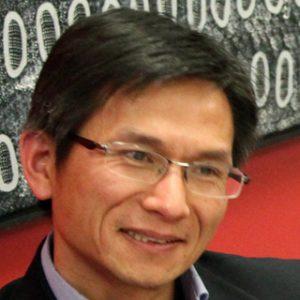
Prof Longbing Cao
University of Technology Sydney, Australia
Longbing Cao is a professor at the University of Technology Sydney. He is the founding director of the Advanced Analytics Institute at the University of Technology Sydney. He holds a PhD in Computing Science and another PhD in Pattern Recognition and Intelligent Systems.
He has been working on promoting data science and analytics research, education, development and engagement since he was a CTO and then joined academia.
Focusing on real challenging problems-driven research, he proposed/dedicates to several concepts with supporting theories, tools and applications, including behaviour informatics, non-IID learning, and domain driven data mining, in addition to issues generally concerned in data mining and machine learning. In education and professional services, he established the Data Science and Knowledge Discovery lab at UTS in 2007, founded the Advanced Analytics Institute and established the degrees Master of Analytics (Research) and PhD in Analytics at UTS in 2011, founded the IEEE Task Force on Data Science and Advanced Analytics (DSAA) and IEEE Task Force on Behavior, Economic and Soci-cultural Computing In 2013, established the IEEE Conference on Data Science and Advanced Analytics (DSAA) and the ACM SIGKDD Australia and New Zealand Chapter in 2014, and started the International Journal of Data Science and Analytics with Springer in 2015. He led several data events including the Big Data Summit and KDD2015 in Sydney. In development and engagement, his team has successfully delivered many large analytical projects for government and business organizations in Australia and overseas, resulting in significant dollar savings and mentioned in government, industry, media and OECD reports.
|
 |
| 12:30-13:30 |
Lunch |
|
| 13:30-15:00 |
Enterprise Analytics: Better Practice Discussions |
Longbing Cao, Paul Beinat |
| 15:00-15:30 |
Afternoon Tea |
|