| 20 Aug: AI/Data science Discipline Course (Meeting room 103, MCEC) |
| Time |
Talk |
Speaker |
| 08:00-08:25 |
Registration |
|
| 08:25-08:30 |
Opening |
Prof Longbing Cao |
| 08:30-09:30 |
Managing the Internet of Things: Challenges, Activities, and Future Directions
The Internet of Things (IoT) is widely regarded as a leading technology to change the world in next decade. IoT will play a critical role to i) improve productivity, operational effectiveness, decision making, and to ii) identify new business models for social and economic opportunities. While IoT-based digital strategies and innovations provide industries across the spectrum with exciting capabilities to create a competitive edge and build more value into their services, there are still significant gaps in making IoT a reality, specially on effectively managing large volume of IoT devices and the information generated from them. In this talk, I will discuss the technical challenges around IoT, overview my 10-year research activities, and also discuss some future research directions.
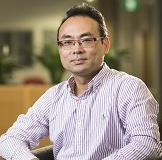
Michael Sheng – ARC Future Fellow
Professor, Head of Department of Computing
Macquarie University, Australia
Dr. Michael Sheng is a full Professor at Macquarie University. Michael holds a PhD degree in computer science from the University of New South Wales (UNSW) and did his post-doc as a research scientist at CSIRO ICT Centre. From 1999 to 2001, Sheng also worked at UNSW as a visiting research fellow. Prior to that, he spent 6 years as a senior software engineer in industries.
Dr. Sheng has more than 270 publications as edited books and proceedings, refereed book chapters, and refereed technical papers in journals and conferences including ACM Computing Surveys, ACM TOIT, ACM TOMM, ACM TKDD, VLDB Journal, Computer (Oxford), IEEE TPDS, TKDE, DAPD, IEEE TSC, WWWJ, IEEE Computer, IEEE Internet Computing, Communications of the ACM, VLDB, ICDE, ICDM, CIKM, EDBT, WWW, ICSE, ICSOC, ICWS, and CAiSE.
Dr. Michael Sheng is the recipient of the ARC Future Fellowship (2014), Chris Wallace Award for Outstanding Research Contribution (2012), and Microsoft Research Fellowship (2003). He is a member of the IEEE and the ACM.
|
 |
| 09:30-10:30 |
Computer vision meets machine learning
Since the concept of Turing machine has been first proposed in 1936, the capability of machines to perform intelligent tasks went on growing exponentially. Artificial Intelligence (AI), as an essential accelerator, pursues the target of making machines as intelligent as human beings. It has already reformed how we live, work, learning, discover and communicate. In this talk, I will review our recent progress on AI by introducing some representative advancements from algorithms to applications, and illustrate the stairs for its realization from perceiving to learning, reasoning and behaving. To push AI from the narrow to the general, many challenges lie ahead. I will bring some examples out into the open, and shed lights on our future target. Today, we teach machines how to be intelligent as ourselves. Tomorrow, they will be our partners to get into our daily life.
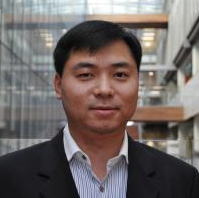
Dacheng Tao – ARC Laureate Fellow
Professor of Computer Science, School of Information Technologies
University of Sydney, Australia
Dacheng Tao is Professor of Computer Science and ARC Future Fellow in the School of Information Technologies and the Faculty of Engineering and Information Technologies at The University of Sydney. He was Professor of Computer Science and Director of the Centre for Artificial Intelligence in the University of Technology Sydney. He mainly applies statistics and mathematics to Artificial Intelligence and Data Science. His research interests spread across computer vision, data science, image processing, machine learning, and video surveillance. His research results have expounded in one monograph and 500+ publications at top journals and conferences, such as IEEE T-PAMI, T-NNLS, T-IP, JMLR, IJCV, IJCAI, AAAI, NIPS, ICML, CVPR, ICCV, ECCV, ICDM; and ACM SIGKDD, with several best paper awards, such as the best theory/algorithm paper runner up award in IEEE ICDM’07, the best student paper award in IEEE ICDM’13, and the 2014 ICDM 10-year highest-impact paper award. He received the 2015 Australian Scopus-Eureka Prize, the 2015 ACS Gold Disruptor Award and the 2015 UTS Vice-Chancellor’s Medal for Exceptional Research. He is a Fellow of the IEEE, OSA, IAPR and SPIE.
|
 |
| 10:30-11:00 |
Morning Tea |
|
| 11:00-12:00 |
Advances in machine learning
Qiang Yang – IEEE/AAAI Fellow
Head of Department of Computer Science and Engineering
Hong Kong University of Science and Technology
Qiang Yang is the head of Computer Science and Engineering (CSE) Department at Hong Kong University of Science and Technology (HKUST), where he is a New Bright Endowed Chair Professor of Engineering and Director of the Big Data Institute. Between 2012 and 2014, he was a founding director of the Huawei Noah’s Ark Research Lab. His research interests are data mining and artificial intelligence including machine learning, planning and case based reasoning He is a fellow of AAAI, IEEE, IAPR and AAAS. He was the founding Editor in Chief of the ACM Transactions on Intelligent Systems and Technology (ACM TIST) and is now the founding EiC of IEEE Transactions on Big Data. He has served as a PC co-chair and general co-chair of several top international conferences, including ACM KDD 2010 and 2012 and IJCAI 2015. He is on the board of Trustees of IJCAI, Vice President of Chinese AI Society (CAAI) and a member of the AAAI executive council.
|
 |
| 12:00-13:00 |
Mathematical modeling & bitcoin blockchain
Unlike cash transactions, most electronic transactions require the presence of a trusted authority to verify that the payer has sufficient funding to be able to make the transaction, and to adjust the account balances of the payer and payee. To overcome the need for such an authority, `BitCoin’ was proposed in 2009 as an `electronic equivalent of cash’. The general idea of Bitcoin is that transactions are verified in a coded form in a `blockchain’, which is maintained by a community of participants who are connected electronically.
Problems can arise when the blockchain splits: that is different participants have different versions, something which can happen only when there are propagation delays, at least if all participants are behaving according to the protocol. On the other hand, there have been some strategies proposed, for example the `Selfish-Mine Strategy’ of Eyal and Sirer, which can affect the splitting behavior.
In this talk I shall present some mathematical models for analysing these phenomena.
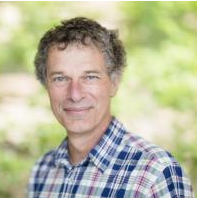
Peter Taylor – Australian Laureate Fellow
Director, ARC Centre of Excellence for Mathematics and Statistics of Complex Systems
The University of Melbourne, Australia
Professor Peter Taylor is an Australian Laureate Fellow from University of Melbourne. He got the PhD degree from University of Adelaide, in 1987. His research interests include stochastic modelling, Markov processes, queueing theory, parameter estimation etc.
Peter is the editor-in-chief of ‘Stochastic Models’, and on the editorial boards of ‘Queueing Systems’, the ‘Journal of Applied Probability’ and ‘Advances in Applied Probability’. He served on the Awards Committee of the Applied Probability Section of the Institute for Operations Research and Management Science (INFORMS) from 2005-2007 and in 2016 was Co-Chair of the committee for the Nicholson Prize, awarded for the best student paper in operations research.
|
 |
| 13:00-14:00 |
Lunch Break |
|
| 14:00-15:00 |
Advances in big graph/data processing
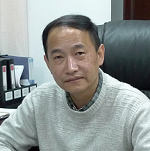
Graphs are very important parts of Big Data and widely used for modelling complex structured data with a broad spectrum of applications such as bioinformatics, web search, social network, road network, etc. Over the last decade, tremendous research efforts have been devoted to many fundamental problems in managing and analysing graph data. In this talk, I will first overview our recent research efforts in processing big graphs including scalable processing theory and techniques, distributed computation, and system framework. We will also look to the future of the area.
Xuemin Lin – IEEE Fellow
School of Computer Science and Engineering
The University of New South Wales
Xuemin Lin is a UNSW Scientia Professor and the head of database group in the school of computer science and engineering at UNSW, Australia. Xuemin’s research interests lie in databases, algorithms, and complexities. Specifically, he is working in the area of scalable data processing covering graph data, spatial-temporal data, streaming data, uncertain data, text data, etc. Xuemin was an associate editor of ACM TODS (2008-2014), IEEE TKDE (Feb 2013- Jan 2015), and an associate editor-in-Chief of IEEE TKDE (2015-2016). He is currently the Editor-in-Chief of IEEE TKDE (2017 Jan – Now). Xuemin Lin was selected as one of the National Thousand Distinguished Overseas Scholars in China in 2010. He is an IEEE Fellow.
|
 |
| 15:00-16:00 |
Ethics in artificial intelligence
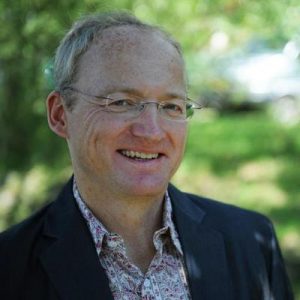
I will discuss four recent events raising profound ethical questions about the development and deployment of AI systems: the Tay chatbot, the Compas program, the Facebook experiment to manipulate people’s emotions, and the first fatality in a Tesla car driving in Autopilot mode. I will suggest some lessons that can be drawn from these incidents about AI development and deployment.
Toby Walsh – Scientia Professor of AI
Group Leader, Data61
Professor, University of New South Wales, Australia
Toby Walsh is a leading researcher in Artificial Intelligence. He was recently named in the inaugural Knowledge Nation 100, the one hundred “rock stars” of Australia’s digital revolution. He is Guest Professor at TU Berlin, Scientia Professor of Artificial Intelligence at UNSW and leads the Algorithmic Decision Theory group at Data61, Australia’s Centre of Excellence for ICT Research. He has been elected a fellow of the Australian Academy of Science, and has won the prestigious Humboldt research award as well as the 2016 NSW Premier’s Prize for Excellence in Engineering and ICT. He has previously held research positions in England, Scotland, France, Germany, Italy, Ireland and Sweden.
He regularly appears in the media talking about the impact of AI and robotics. In the last year, he has appeared in TV and the radio on the ABC, BBC, Channel 7, Channel 9, Channel 10, CCTV, DW, NPR, RT, SBS, and VOA, as well as on numerous local radio stations. He also writes frequently for print and online media. His work has appeared in the New Scientist, American Scientist, Le Scienze, Cosmos and The Best Writing in Mathematics (Princeton University Press). His twitter account has been voted one of the top ten to follow to keep abreast of developments in AI. He often gives talks at public and trade events like CeBIT, the World Knowledge Forum, TEDx, The Next Big Thing Summit, and PauseFest. He has played a key role at the UN and elsewhere on the campaign to ban lethal autonomous weapons (aka “killer robots”).
|
 |
| 16:00-16:30 |
Afternoon Tea |
|
| 16:30-17:30 |
Knowledge discovery & social analytics
Nowadays, there are applications in which the data are modelled best not as persistent tables, but rather as transient data streams. In this lecture, we discuss the current trends in machine learning and data mining algorithms. We discuss the fundamental issues in learning in dynamic environments like learning decision models that evolve over time, learning and forgetting, concept drift and change detection. We will analyse the evolution of social networks. Analysing and mining such evolutionary streams gives actionable insights into data. In this talk we discuss the research opportunities opened in analysing evolving data, detecting events, identifying communities and tracking the evolution of communities through the events they trigger.
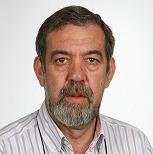
Joao Gama – ACM Distinguish Speaker (2016-2019)
Associate Professor, Laboratory of Artificial Intelligence and Decision Support
University of Porto Porto, Portugal
Joao Gama is an Associate Professor at the University of Porto, Portugal. He is also a senior researcher and member of the board of directors of the Laboratory of Artificial Intelligence and Decision Support (LIAAD), a group belonging to INESC Porto. João Gama serves as the member of the Editorial Board of Machine Learning Journal, Data Mining and Knowledge Discovery, Intelligent Data Analysis and New Generation Computing. He served as Co-chair of ECML 2005, DS09, ADMA09 and a series of Workshops on KDDS and Knowledge Discovery from Sensor Data with ACM SIGKDD. He was also the chair for the conference of Intelligent Data Analysis 2011. He has given 7 keynotes and 2 plenary talks. His main research interest is in knowledge discovery from data streams and evolving data. He is the author of a recent book on Knowledge Discovery from Data Streams. He has extensive publications in the area of data stream learning.
|
 |